Building a Multi-Agent Orchestration System for 3 Months: Honest Lessons
After 3 months architecting an AI Agent orchestration system, this isn't a glossy case study — it's about core architectural choices and why I refuse to rush metrics.

Building a Multi-Agent Orchestration System for 3 Months: Honest Lessons
TL;DR: After spending three months architecting and deploying a system that orchestrates multiple AI Agents, I don't have a glossy case study with hockey-stick growth charts to show off. This post outlines three foundational architectural decisions I committed to, and explains why I am deliberately holding back on publishing ROI numbers — because to me, measuring accurately matters far more than measuring quickly.
Three months ago, I sat down and admitted an uncomfortable truth: working solo, I could no longer keep pace with operational demands, no matter how many disconnected AI tools I stacked together. Each agent did its individual job decently well, but none of them could talk to one another. I became the lone human glue running between scattered browser tabs, manually passing context around. This post is not a sanitized marketing showcase. This is genuine building in public — a candid debrief on three architectural decisions I made while building an AI Agent orchestration layer for daily business operations, and why I refuse to rush out efficiency metrics before the dust has settled.
The Original Bottleneck: Scaling Solo and Deciding to "Build It Myself"
Before deciding to build from the ground up, I tested the easier route: chaining disparate, off-the-shelf AI tools. One wrote rough drafts, another searched internal docs, and a third handled inbound customer tickets. The breakdown wasn't the quality of individual agents. The breakdown was that I was spending half my working day acting as a manual switchboard operator: copying payloads between interfaces, remembering which agent had run which task, and manually injecting fresh data into stale context windows. As workload grew, I felt less like a strategic founder and more like a high-stress clerk.
I explored the roots of this decision — why I chose to build custom orchestration rather than continuing to patch together disconnected SaaS tools — in Why I Built a Custom AI Agent Orchestrator Instead of Buying Off the Shelf. The core diagnosis remains unchanged: the bottleneck was never a lack of AI tools; it was the total absence of an orchestration layer that knew which agent should do what, at what moment, and with what slice of data. Once that became clear, the question was no longer "Which tool should I buy next?" but "How do I build the coordinator?"

Choosing to build wasn't about preferring code over strategy. It came from a core Director Mindset conviction: if the orchestration layer dictates whether your entire business workflow runs or breaks, it is the one component you cannot afford to outsource to a black-box tool where you don't control the underlying execution logic.
Three Core Architectural Decisions Made Over the Past 3 Months
Three months isn't enough to perfect an operating system, but it is enough to cement foundational architectural decisions that are painful to reverse later. Here are the three most critical ones, explained at a conceptual level:
1. A Shared Knowledge and Memory Layer, Rather Than Siloed Agent Context
The most pervasive failure mode in multi-agent setups is letting each agent maintain its own isolated memory. Agent A sees a fragment of reality, Agent B sees another, and nobody holds the complete picture. I separated memory entirely from execution: creating a centralized, shared knowledge layer that acts as the single source of ground truth. All agents read from and contribute back to the same structured knowledge graph, preventing context drift and hallucinations across multi-step handoffs.
2. Role-Based Dynamic Routing Instead of Rigid Sequential Pipelines
Initially, I tried the intuitive approach: sequential step pipelines (Agent 1 completes, passes to Agent 2, passes to Agent 3). This breaks immediately the moment real-world work deviates from happy-path scripts — tasks need loops, exceptions, or skipped steps. I migrated to a role-based orchestration model: each agent is declared by its operational scope and capabilities, and a central director agent dynamically assigns tasks based on the immediate real-time state, rather than following an inflexible linear chain.
3. Granular Autonomy Tiering Instead of Binary "All or Nothing"
This was the decision I approached with the greatest caution, having previously paid a steep price for letting AI run unmonitored. Instead of treating autonomy as binary ("full auto" vs. "AI only suggests"), I established tiered permissions: repetitive, low-risk internal tasks run autonomously end-to-end. Any action with external exposure (sending messages, publishing live pages, editing critical records) strictly requires my explicit sign-off before hitting production. This boundary isn't permanent — it expands incrementally as empirical trust in each specific task is earned.
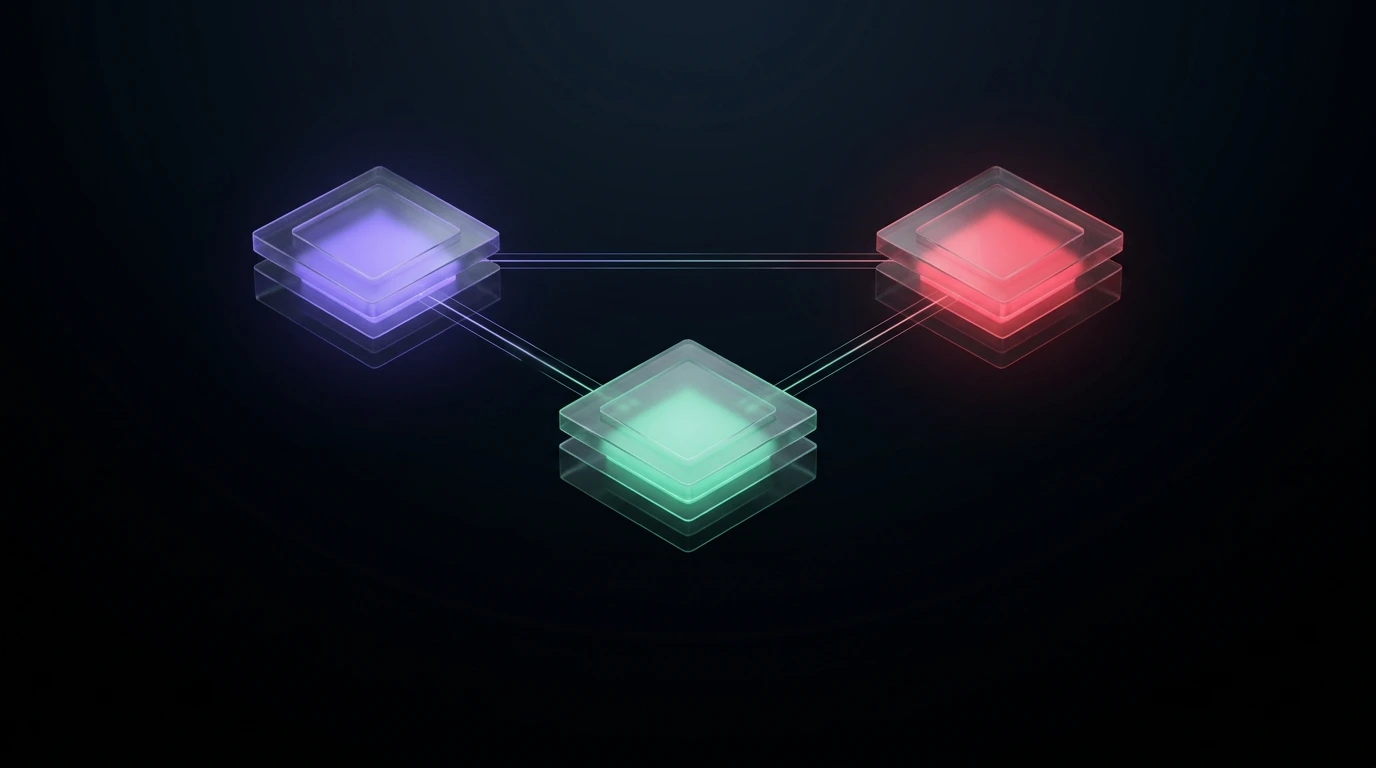
All three decisions share a single design philosophy: I prioritized debuggability, verifiability, and resilience over vanity launch speed. It made those three months feel slower, but the resulting foundation is rock solid.
Why I Refuse to Publish Performance Metrics — Even Though the System Is "Finished"
The system has completed its build and initial deployment phase, but "finished" simply means operational — not empirically measured over time. I am deliberately withholding performance statistics because we haven't accumulated enough real-world runtime to separate actual structural gains from the novelty effect of a freshly deployed tool.
This is the point where I want to be completely transparent. The system is built, running, and coordinating daily tasks. But "it works" does not mean "its long-term ROI is proven." The first three months were dedicated to stability, edge-case handling, and architectural integrity — not producing marketing numbers.
We see countless product launches touting staggering productivity claims the day after release. Launch hype demands a dramatic story. But under the banner of Tôi Là Tùng and my Quiet Authority philosophy, I hold myself to a stricter standard: I will never publish a metric that I haven't rigorously stress-tested and personally audited. A system that has only been live for a few weeks might look 50% faster simply because the founder is paying hyper-vigilant attention during onboarding.
Put simply: I would rather have no public numbers than publish metrics that I cannot defend under technical scrutiny.

What I Will Measure Over the Next Month — and Why Measuring Accurately Trumps Measuring Fast
In the upcoming phase, I will track two primary operational indicators: the percentage of tasks resolved autonomously without human intervention, and the rate at which I am forced to downgrade autonomy permissions. The reason accurate measurement beats fast measurement: premature, flawed numbers cause flawed strategic decisions.
Specifically, I am setting up tracking for two key data points over the coming month:
- Autonomous Resolution Rate: The proportion of end-to-end tasks an agent resolves cleanly without requiring manual fixes or code rollbacks. This measures actual orchestration health, rather than vanity metrics like raw response latency.
- Autonomy Downgrade Frequency: How often I am forced to revoke an agent's elevated permissions back to gated review after granting them. A high downgrade rate signals that I am expanding autonomy faster than the system's actual reliability justifies.
I am intentionally not setting a rigid deadline for my first public case study. The hard lesson from an earlier failure — when I granted AI excessive autonomy too soon and broke production workflows — is why I refuse to repeat the mistake in another form: publishing claims before the data is incontrovertible. I documented that story and the recovery safeguards I built in Lessons from My First Failed AI Project: The Cost of Missing Human Control.

Conclusion
Three months of building an AI Agent orchestration engine hasn't produced a viral case study with inflated percentages, and that is perfectly fine — genuine building in public doesn't guarantee a neat graph at every milestone. What I walked away with is three architectural choices I stand behind, and a clear personal discipline: only publish numbers when the evidence is undeniable. If you are considering building an agent orchestration layer for your own business, the most important question to ask right now isn't "How fast can I build it?", but "Once it is live, how will I prove it works without lying to myself?"
Nhận Bộ Thư Viện Prompt & SOP AI Workflow Vận Hành Doanh Nghiệp 2026
Tặng miễn phí Ebook PDF + Notion Template quản lý AI System thực chiến từ Tôi Là Tùng. Gửi trực tiếp vào hòm thư công việc của bạn.
Khám Phá Kho Workflow & SOP AI Thực Chiến
Thư viện quy trình, SOP vận hành và công cụ AI tôi đang dùng thật cho hệ thống của mình — chọn đúng thứ bạn cần.

Bài Liên Quan

Tháng thứ tư với hệ thống AI Agent: khi sự hào hứng biến mất và kỷ luật bắt đầu

Vì sao tôi tự xây bộ điều phối AI Agent, không dùng framework