What Is Vibe Coding? Programming in the Natural Language Era
Discover Vibe Coding — how next-gen developers use natural language to direct AI systems. Explore its benefits, pitfalls, and how to get started in 2026.
TL;DR: Discover Vibe Coding — how next-gen developers use natural language to direct AI systems. Explore its benefits, pitfalls, and how to get started in 2026.
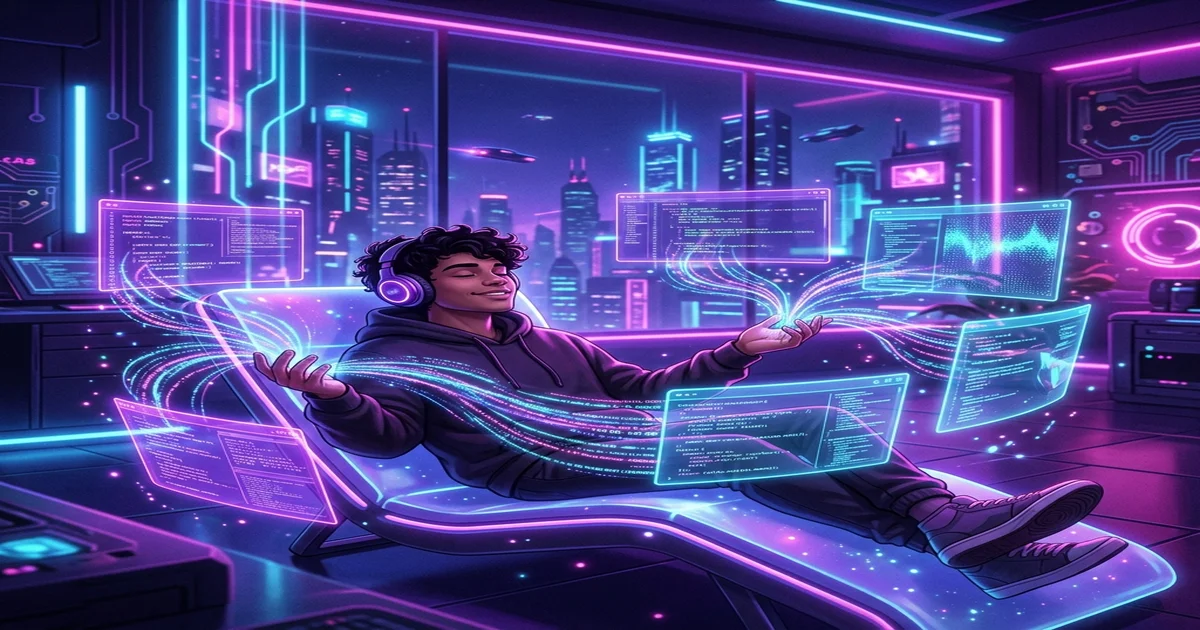
Imagine a world where you do not need to memorize every line of React, Python, or CSS syntax. You simply sit back and describe what you want: a dark interface, a frosted glass effect, and a button that glows on hover. Within 15 seconds, the computer outputs thousands of lines of clean code, completely syntax-error free, running immediately.
This is not a far-off futuristic vision. This is the reality happening every day in 2026, and the tech community calls it Vibe Coding.
The rise of large language models (such as Claude 3.5 Sonnet and GPT-4o) has permanently changed the definition of a "programmer." Vibe Coding is emerging as a massive wave, empowering non-technical builders to turn raw ideas into fully functional software. This article takes you deep into the world of Vibe Coding, decoding why it has gone viral and how you can apply it today.
1. What actually is Vibe Coding?
The term Vibe Coding was popularized by Andrej Karpathy (former Director of AI at Tesla) in late 2024 and exploded across the AI developer community. The "vibe" here refers to "feeling" the architecture, logic, and flow of your software, then using natural language (English or Vietnamese) to describe that "feeling" to the AI.
While Traditional Coding requires you to translate your thoughts into machine-interpretable syntax (C++, Java, Javascript), Vibe Coding allows you to program directly in human language.
In Vibe Coding, the AI (like Claude, Cursor, or Windsurf) acts as an ultra-fast, mid-level developer. You, on the other hand, play the role of the System Architect or Product Manager. You do not write the code; you "direct" the AI to write it.
2. Why did Vibe Coding explode in 2026?
The explosion of Vibe Coding is not driven by human laziness, but by the massive evolution of underlying AI technologies.
The Maturity of Agentic AI
AI systems in 2023 were purely Q&A engines. You asked for a code snippet, it gave you a code snippet. However, the Agentic AI of 2026 possesses true Autonomy. When granted workspace access via an IDE (like Cursor), the AI can read files, locate bugs, fix them, run terminal commands, install libraries, and even deploy to servers automatically.
Massive Context Windows
The second reason is the AI's memory capacity. With Claude 3.5 Sonnet supporting up to 200K tokens, you can feed an entire codebase of tens of thousands of lines directly into the AI. It can grasp the entire software ecosystem to write new features without breaking existing code.
Lowering the Barrier to Creation
Previously, 90% of software ideas died because the creator did not know how to code, lacked budget to hire developers, or gave up due to cryptic technical errors. Vibe Coding levels the playing field, letting anyone build a Minimum Viable Product (MVP) in a few hours.
3. Traditional Coding vs. Vibe Coding
To better understand this paradigm shift, let's look at how a feature (like adding Google OAuth Login) is implemented under both models.
Traditional Coding (The Old Model)
- The developer opens the Google OAuth documentation to read the integration steps.
- Manually installs dependencies (
npm install google-auth-library). - Manually writes token handlers, stores sessions in cookies, and maps database schemas.
- Manually designs the UI buttons for "Log in with Google".
- Encounters CORS or Invalid Token errors -> spends 2 hours searching StackOverflow for fixes. Total Time: 4-6 hours.
Vibe Coding (The New Model)
- You open Cursor (AI IDE) and type: "Integrate Google Login using NextAuth library. Style the button with a Premium Dark UI theme. Update the database schema to store user details."
- The AI reads the project, installs
next-auth, generates the API routes, and designs the UI. - The AI displays the diff. You review and click
Accept. - Got an error? You highlight the terminal error line and type: "What does this error mean, fix it." The AI corrects it in 5 seconds. Total Time: 15 minutes.
4. The 3-Step Process to Master Vibe Coding
Vibe Coding does not mean typing "make me a software like Facebook" and sitting back. To be a true Vibe Coder, you need a systems mindset.
Step 1: Decomposition (Problem Slicing)
AI struggles with overly broad and vague requests. The most important skill in Vibe Coding is the ability to break down problems. Instead of asking to "build a website," ask to "create the folder structure," then "build the header," and then "build the main content layout."
Step 2: Systematic Prompting
A great Vibe Coder rarely chats with AI in short, loose sentences. They use structured prompts (Role, Context, Task, Constraints) and feed reference documents (such as the latest design systems or API documentation) to the AI before asking it to write code.
Step 3: Code Reading and Reviewing
You don't need to write code, but you must know how to read code. If the AI outputs 500 lines of code, you must scan it to ensure it uses the correct libraries, exposes no security vulnerabilities, and avoids infinite loops.
5. Dangerous Misconceptions About Vibe Coding
Despite its power, Vibe Coding is often misunderstood.
- Misconception 1: Software developers will lose their jobs. Entirely false. Vibe Coding eliminates "code monkeys" (developers who only copy-paste code). But it elevates true software engineers. A Senior Developer utilizing Vibe Coding can handle the output of 10 Junior Developers.
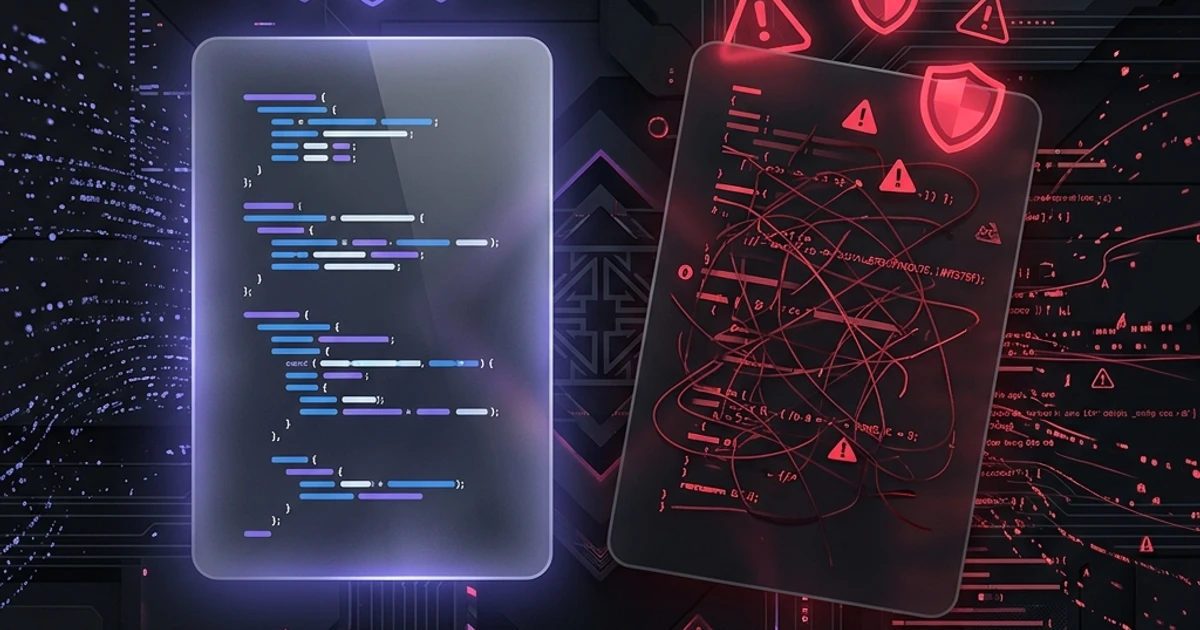
- Misconception 2: You don't need to understand logic to build apps. If you don't grasp basic concepts like data flow, frontend vs. backend, or database normalization, you will quickly lead your project into an unmaintainable mess (Spaghetti Code) as it scales. AI cannot save a fundamentally flawed architecture.
- Misconception 3: The AI is responsible for the code. AI has no concept of security or system optimization unless explicitly prompted. You must remain the pilot of the project.
6. Current Limits and Necessary Skills
In 2026, Vibe Coding still has its kryptonite.
First is the Context Window limit. No matter how large, once a project scales to enterprise level (millions of lines of code), the AI begins to hallucinate, forgets logic in older files, and generates conflicting code.
Second is Niche Domain Knowledge. AI is highly proficient in mainstream tech stacks like React, Python, and Node.js. But if you ask it to code for a banking system running COBOL from 1980, or integrate a local payment gateway with no English docs, the AI will stumble.
Advice for the Next-Gen Vibe Coder
Instead of memorizing functions and syntax, study Software Architecture, Database Design, and Security. Learn to think like a product manager, because you now have an elite execution team at your fingertips.
7. Frequently Asked Questions (FAQ)
Q: I have never written a line of code. Can I start Vibe Coding? A: Absolutely. The best advice is to start with tiny projects (like a static landing page or a to-do list) to learn how the AI thinks. Use tools like Cursor or Vercel v0 to design interfaces with plain words.
Q: What are the best tools for Vibe Coding today? A: As of 2026, the power trio is: Cursor IDE (workspace environment), Claude 3.5 Sonnet / Claude 3.7 Sonnet (thinking engine), and Windsurf (next-gen agentic IDE).
Q: Does code written by AI violate copyright? A: Legally, code generated by AI belongs to the user (you) and does not violate copyright if you design the architecture from scratch. However, you should avoid copying commercial code verbatim.
8. Conclusion
Vibe Coding is not a passing trend. It is a fundamental shift in how humans communicate with machines. Tech history is a continuous process of raising abstraction: from punch cards, to Assembly, to C, to Python, and now to Natural Language.
If you are staying out of this game out of fear, you are missing out on the biggest leverage of the decade. Install an AI IDE, open your dark editor, and start "vibing" your very first lines of code.
To master professional Vibe Coding, avoid code clutter, and own an international standard software delivery process, the Claude Code Mastery Pro course is your ideal starting point.
For a deeper understanding of how to optimize your AI-assisted workflow, read: Comprehensive Guide to Vibe Coding or explore 5 Critical Errors Causing AI Spaghetti Code and How to Solve Them shared by Tôi là Tùng.
Tải Playbook Vibe Coding: Setup Cursor & Claude Code Chuẩn
SOP hướng dẫn thiết lập Brain file (.cursorrules / CLAUDE.md) tối ưu token và cách chia nhỏ bài toán để AI sinh code không lỗi.