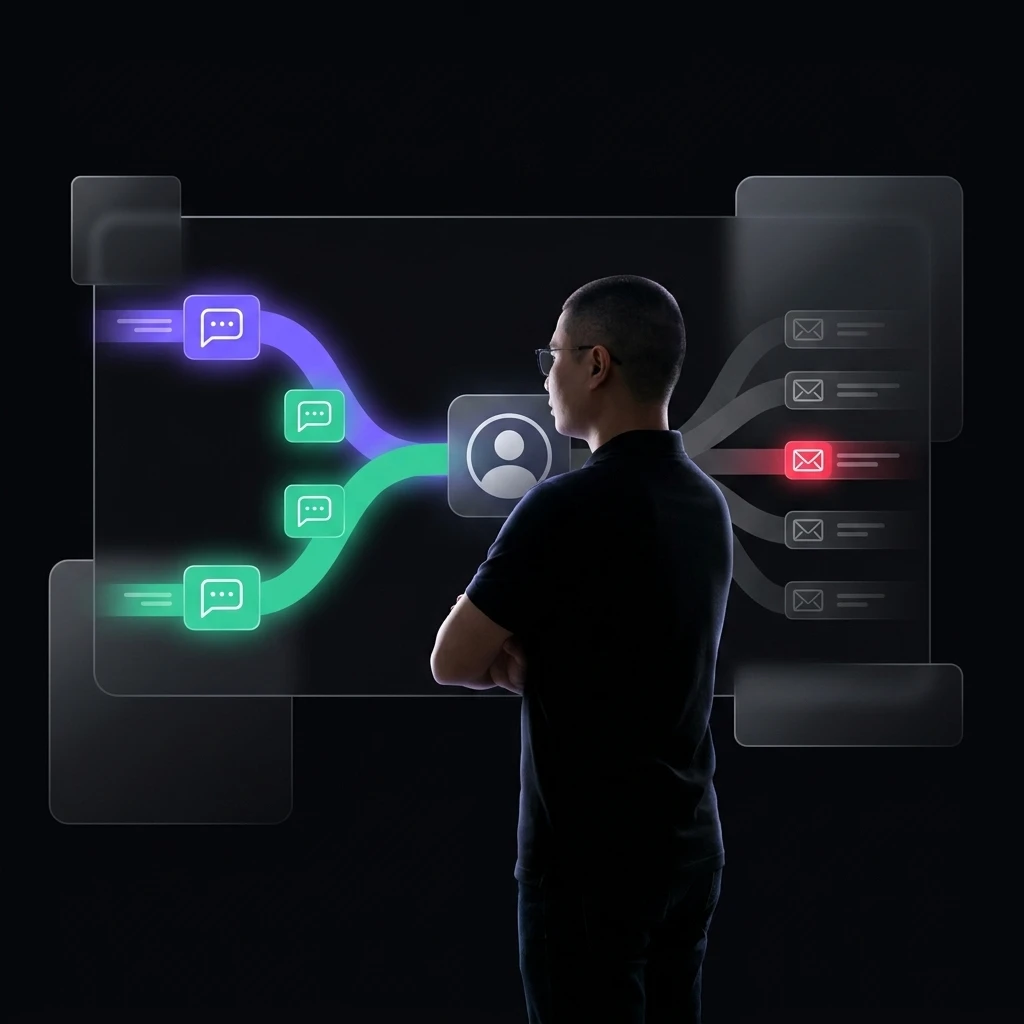
Zero Trust for AI Agents: When Does a Human Need to Approve?
Full automation is a trap. Here is how I tier autonomy for AI Agents — which actions are left to the Agent, and which strictly require human sign-off.

Zero Trust for AI Agents: When Does a Human Need to Approve?
TL;DR: Giving an AI Agent complete autonomy is not the finish line — it is a trap. Controlled Autonomy is the practice of tiering authority based on the risk profile of each specific action: reversible tasks are handled autonomously by the Agent, while irreversible actions (moving money, deleting data, public publishing) strictly mandate human approval before execution.
I used to believe the ultimate goal of building AI Agents was to eliminate humans from the workflow entirely. The more automated, the "cooler" the AI. I was wrong. After months of running a multi-agent system for daily operations, I realized what makes a system genuinely trustworthy isn't how many tasks it automates end-to-end, but whether it knows when to stop. Here is how I tier autonomy for my Agents — and why "full auto" is consistently the wrong choice for irreversible actions.
This piece builds on the foundation laid in What Is Human-in-the-Loop — and When Does AI Actually Need Human Control?, but dives deeper into the hardest architectural problem: moving beyond deciding whether you need checkpoints, to constructing an explicit operational matrix so an Agent inherently knows when it is authorized to act, and when it must wait.
What Is Controlled Autonomy, and Why Is "Full Automation" a Trap?
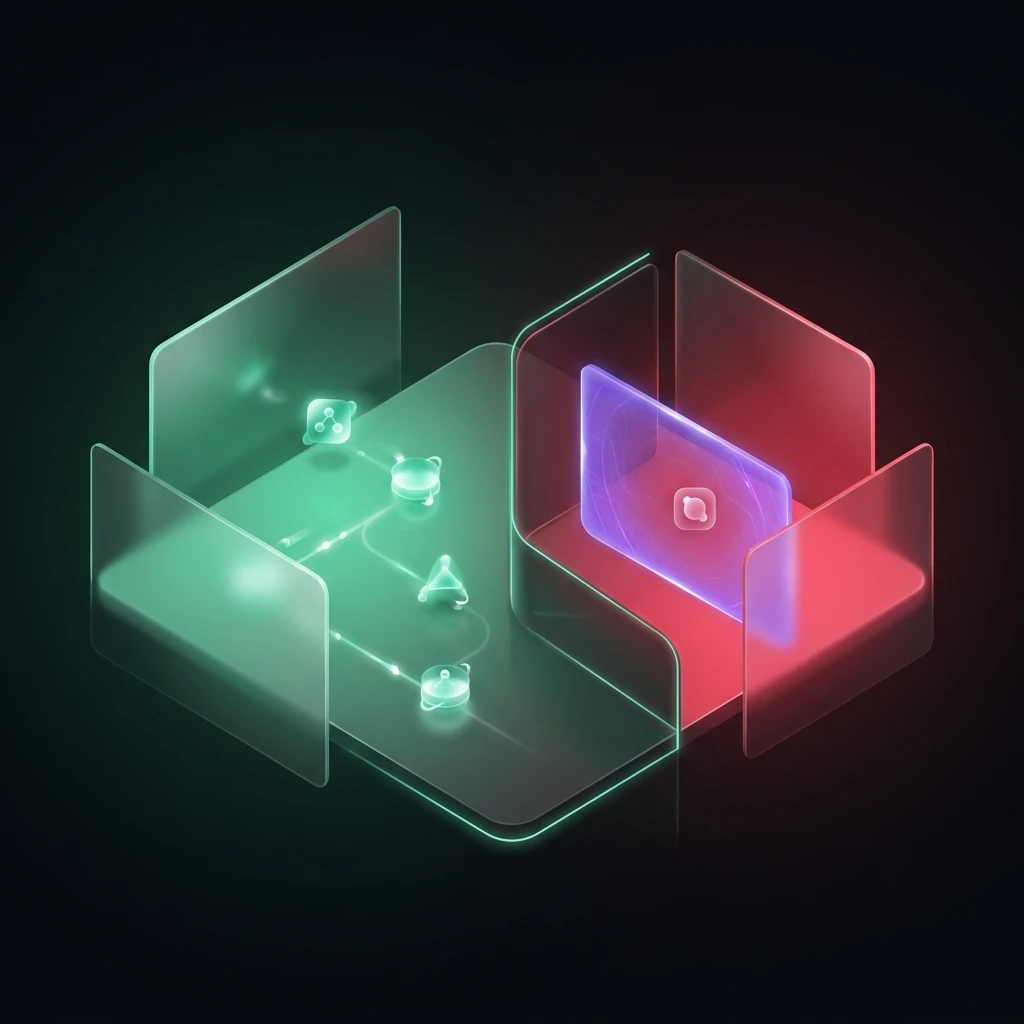
Controlled Autonomy is the design principle of scoping an AI Agent's execution authority according to specific risk levels, rather than granting a static blanket permission across an entire system. An Agent operates with maximum autonomy on reversible actions, and remains strictly locked down on irreversible actions — regardless of how "intelligent" the underlying foundation model claims to be.
The trap of "full automation" hinges on a dangerous silent assumption: that if an Agent is capable enough, it will never make a mistake. But the problem isn't whether an Agent makes mistakes — it will, sooner or later, exactly like a human engineer. The real issue is the blast radius of that mistake.
If an Agent misclassifies an internal email once, you correct it in ten seconds. If an Agent accidentally blasts an unvetted email to your entire customer database once, you cannot un-send it. Same model, same generic "send" task, but the risk profiles are worlds apart based purely on reversibility and external exposure, not the model's IQ.
This is why I abandoned "agent-level permissions" (Agent A has full admin, Agent B is read-only) in favor of "action-level permissions." The exact same Agent can operate with total autonomy on one step, yet hit a hard wall on the next — because the intrinsic nature of the action is different, not the identity of the Agent.
Here are the three variables I evaluate to price risk for every single action:
- Reversibility: Can this action be rolled back cleanly within minutes, or is it permanently written into stone?
- Blast Radius: Does a failure corrupt a single internal database row, or does it leak outward (to clients, the public, or company finances)?
- Verification Cost: How many seconds does it take a human to verify the proposed outcome before execution, versus the cost of repairing the damage after the fact?
The Autonomy Matrix: What Agents Execute Solo vs. What Hits an Approval Gate

Using those three variables, I divide Agent actions into four operational tiers. This is the practical framework I run in my own production setup — not an academic standard, but a grounded mental model applicable to any Agent deployment, large or small.
| Tier | Name | Characteristics | Concrete Examples |
|---|---|---|---|
| 1 | Full Autonomy | Highly reversible, internal blast radius, manual verification costs more than it saves | Reading records, summarizing documents, drafting content (unsent), internal tagging/categorization |
| 2 | Autonomy with Logging | Moderate reversibility, internal scope, but errors cause minor operational friction | Updating task statuses, writing internal system notes, scheduling internal calendars |
| 3 | Approval Gate | Low reversibility, or blast radius extends outside the company | Sending outbound emails/messages, publishing public content, changing production configs |
| 4 | Strictly Forbidden | Irreversible and/or directly impacts finances, legal compliance, or sensitive credentials | Moving money, permanent data deletion, modifying IAM permissions or system keys |
The crux of the system lies in Tier 3 — precisely where most SME and solopreneur setups fail. Builders typically swing between two unworkable extremes: "let it run completely wild" (applying Tier 1 to everything) or "micromanage every keystroke" (applying Tier 4 to everything). Both are fatal — the former creates catastrophic operational risk, while the latter makes the system so sluggish nobody uses it.
An Approval Gate at Tier 3 does not mean the human re-does the work. It means the Agent completes 95% of the heavy lifting — gathering context, compiling data, drafting the payload, and formulating the proposed action — and stops at the final 5%: pressing the confirmation button. The difference between "an Agent preparing 95% of the work while a human checks the last 5%" and "a human doing 100% from scratch" is where the entire ROI of controlled automation lives.
The Zero-Trust Agent Mesh Trend: Lessons for Small-Scale SME Systems

A Zero-Trust Agent Mesh is an architectural pattern where no Agent is implicitly trusted — every action, even internal handoffs between peer Agents, must be authenticated and restricted to specific scoped tasks, rather than granting blanket system-wide credentials.
In mid-August 2026, the global developer ecosystem took note of an open-source initiative called SAM (Sovereign Agent Mesh) — reported by MarkTechPost on August 18, 2026 — establishing a zero-config, zero-trust peer-to-peer (P2P) networking layer that enables AI Agents to discover and execute MCP (Model Context Protocol) tools across distributed environments. While I am not implementing that specific technical codebase, the phrase "Zero Trust" chosen by modern AI architects signals a pivotal macro shift: the industry's focus is no longer about increasing uncontrolled autonomy, but hardening verifiable controls as multi-agent swarms scale.
For an SME or solo expert operating a lean setup of 2 to 4 Agents, you do not need complex enterprise mesh networking. However, the foundational principle — "never trust by default, authenticate every action" — applies directly to your daily scripts:
- Never grant permissions based on static "roles." An Agent handling email workflows should not automatically possess outbound SMTP write access just because it is named "Email Agent." Draft privileges (Tier 1) must be strictly decoupled from dispatch privileges (Tier 3).
- Log every Tier 2+ action systematically, even when the Agent executes without an approval prompt. You don't need to read logs daily, but they must exist when an incident occurs and you need to trace: "What did the Agent do, and at what millisecond?"
- Treat handoffs between two Agents as isolated permission boundaries, not open pipelines. Agent A invoking Agent B must never grant Agent A the total authority of Agent B.
The lesson here is not "build heavy enterprise infrastructure." The lesson is that even at the cutting edge of autonomous development, architectural evolution is shifting toward more deterministic control layers, not fewer. If you were tempted to skip approval gates for convenience, reconsider.
Setting Up Approval Gates via Telegram/Slack Without Slowing Down Ops
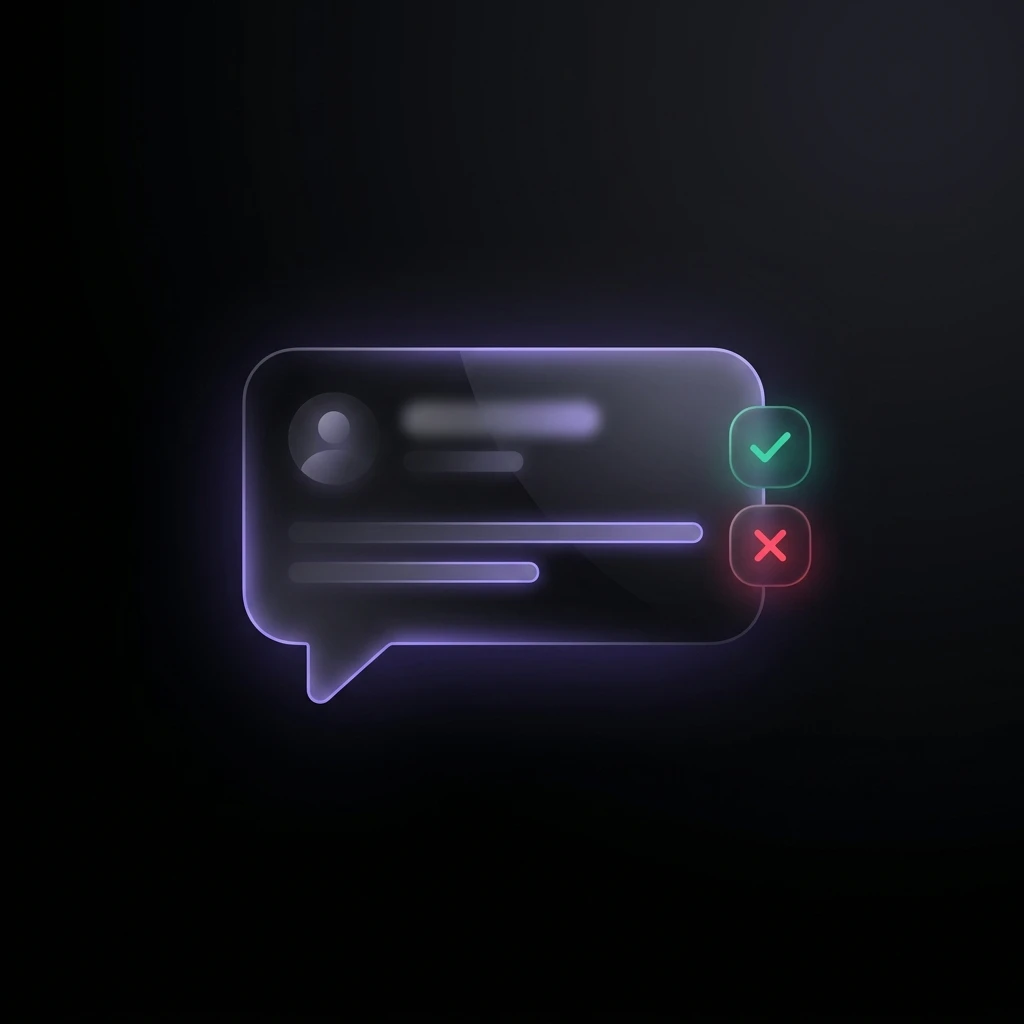
An Approval Gate is only viable if reviewing takes less time than doing the job yourself. If signing off requires opening five tabs, hunting down raw JSON logs, and re-reading entire context windows, you will eventually bypass the gate, rendering it useless theater.
Here is how I design approval gates to keep operations moving fast:
- Meet yourself where you already work. For me, that is Telegram — an app I naturally check throughout the day. The Agent routes review prompts directly to a private chat channel rather than an esoteric dashboard I have to remember to check.
- Pack self-contained context into a single message. A proper approval prompt must answer three questions at a glance: What does the Agent want to do, why does it recommend this action, and what happens if you take no action?
- Define explicit default timeouts. Never let a system hang in purgatory. For non-urgent operations, the default action on timeout must always be Abort, never Execute. The Agent must receive an explicit "Yes" — silence is never consent.
- Approve via a single interaction — one tap or one character. Use inline Telegram/Slack buttons (
[Approve],[Reject]) or a single reply. The lower the friction, the more faithfully the approval gate will be respected instead of disabled out of frustration.
An approval gate isn't designed to slow your system down — it is what gives you the confidence to let the rest of your system run at full throttle, knowing the highest-risk actions have a hard stop.
Conclusion
I no longer ask "How can I make this Agent 100% autonomous?" The sharper question is: Which actions in this architecture genuinely demand a human nod, and how do I make that nod take less than three seconds? Controlled Autonomy does not cap the potential of your AI system — it is the prerequisite that enables you to safely delegate higher-value operations over time, without having to rebuild trust from zero after every failure.
If you are currently defining behavior boundaries and persona traits at the system prompt layer, this permission architecture works hand-in-hand with how you instruct your Agent — a methodology I dissect in Director Mindset: Writing System Prompts That Shape Agent Personas.
Nhận Bộ Thư Viện Prompt & SOP AI Workflow Vận Hành Doanh Nghiệp 2026
Tặng miễn phí Ebook PDF + Notion Template quản lý AI System thực chiến từ Tôi Là Tùng. Gửi trực tiếp vào hòm thư công việc của bạn.
Sở Hữu Lexi AI Autopilot — Hệ Thống Multi-Agent Marketing & Sales
Bộ mã nguồn tự động hóa quy trình marketing/sales bằng nhiều AI Agent phối hợp — chỉ 45.000đ, kèm bonus trị giá 1.5 triệu đồng.

Bài Liên Quan

Human-in-the-loop là gì — và khi nào AI cần người kiểm soát

Tháng thứ tư với hệ thống AI Agent: khi sự hào hứng biến mất và kỷ luật bắt đầu